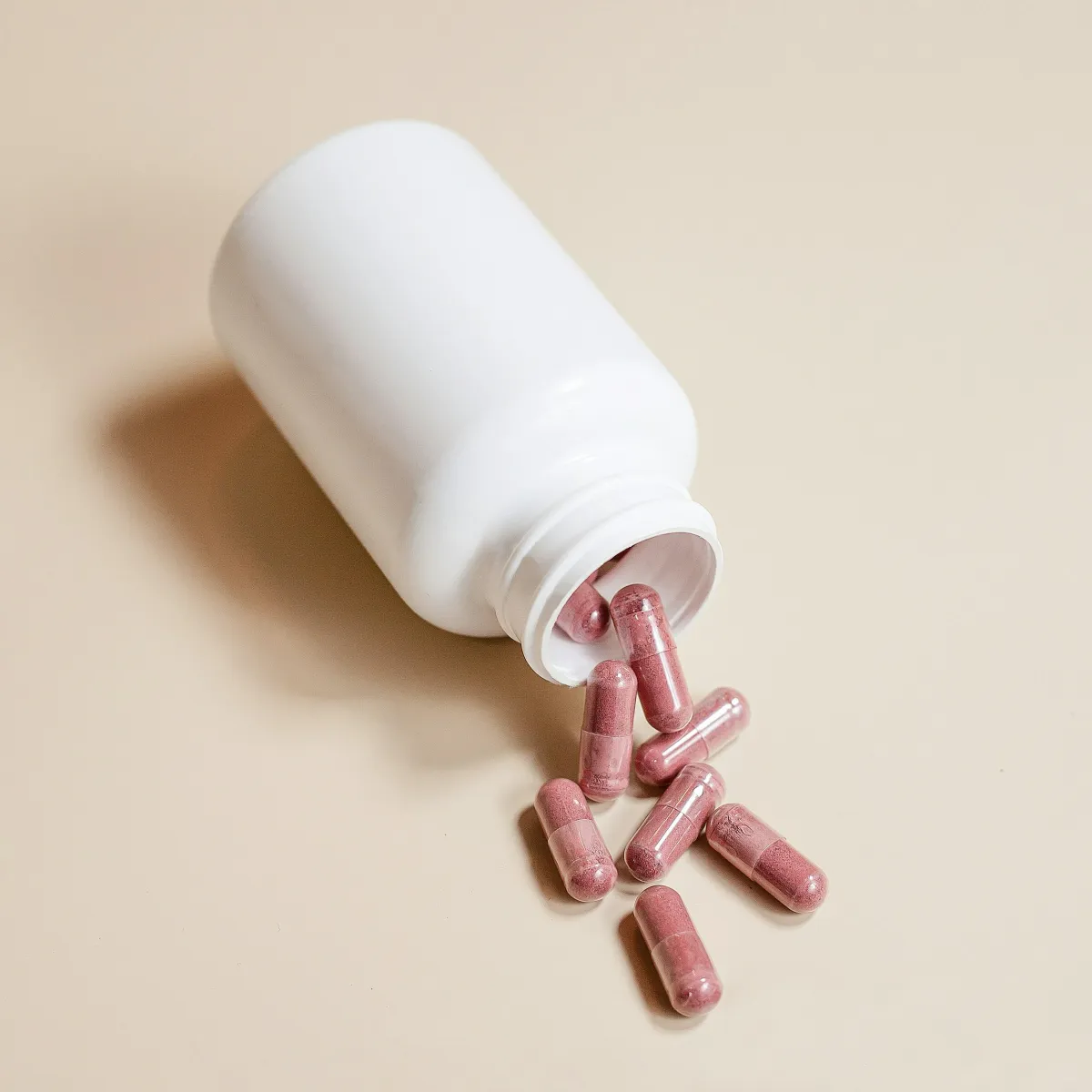
Supplements for Low Sex Drive During Menopause
"I still love my partner. I just don't feel it the way I used to." I hear some version of this every single week. And almost every time, the woman sitting across from me has already been told it's just stress, just aging, just something to accept. It is not. A shift in sexual desire during menopause is one of the most common concerns I treat, and it is a legitimate medical issue, not a character flaw and not an inevitability.
Many women searching for answers find their way to the supplement aisle first. I understand the impulse completely. Supplements feel accessible, controllable, and low-risk. But I want to be honest with you about where they actually fit in the clinical picture, because the evidence-based treatments for low desire in menopause are often far more effective than anything on a supplement shelf. Too many women spend years working around a problem that has a real, well-studied clinical solution.
Why sex drive changes in menopause: the root causes
Low libido in menopause is not a personal failing. It has clear biological and psychological drivers, and understanding what is actually happening in your body is the first step toward addressing it effectively.
Declining estrogen leads to genitourinary syndrome of menopause (GSM): thinning, dryness, and fragility of the vaginal and vulvar tissue, vestibular pain, and urinary urgency. When sex is uncomfortable or painful, the brain, quite reasonably, stops wanting it. GSM is one of the most undertreated drivers of low desire, and no supplement addresses it. It requires local hormone therapy, and it responds well to treatment.
Testosterone is a human hormone, not a male one. It declines with age in women, and the research consistently shows it matters for arousal, desire, and orgasm function. When levels fall significantly, desire often follows.
For some women, a persistent absence of sexual interest that causes personal distress meets the clinical criteria for hypoactive sexual desire disorder (HSDD). It is the most common sexual complaint among women, and it is treatable with medical therapy.
Hormones are only part of the picture. Other contributors include:
- Stress and elevated cortisol, which suppresses sex hormones
- Poor sleep quality, which depletes the neurochemical foundations of desire
- Body image changes that affect confidence and openness to intimacy
- Mood changes, including anxiety and depression, which are more common during the menopause transition and significantly impact libido
- Relationship dynamics, including a partner who has internalized the change as personal rejection, communication gaps, and the accumulated weight of a long-term relationship moving through a stressful season
What works first: the clinical foundation
Before we talk about supplements, I want to be direct: the evidence-based treatments for low sexual desire in menopause are more effective, more targeted, and more rigorously studied than anything in the supplement category. If you have not explored these options with a knowledgeable provider, that is where to start.
- Local vaginal estrogen or vaginal DHEA (prasterone): for GSM-driven sexual pain and desire loss. Both are FDA-approved, well-studied, and appropriate for many women who cannot use systemic hormone therapy. Vaginal DHEA is particularly effective for vestibular pain, given the testosterone receptor density in that tissue.
- Systemic hormone therapy: for women carrying a broader constellation of menopause symptoms. It addresses the systemic hormonal drivers of mood, sleep, and libido. It often works best in combination with local vaginal therapy, not instead of it.
- Low-dose transdermal testosterone therapy: used off-label for postmenopausal women at physiologic doses, monitored through levels. This is the most evidence-supported option we have for hormonally driven low libido specifically.
- Addyi (flibanserin): FDA-approved for HSDD and now approved for postmenopausal women up to age 65 in the U.S. It carries roughly a 50 to 60% response rate and works as a daily, non-hormonal option that shifts brain chemistry toward desire.
- Vyleesi (bremelanotide): FDA-approved for premenopausal HSDD and used as needed before sexual activity. Also used off-label in postmenopausal women.
These are real treatments with real data behind them. Lifestyle foundations matter too: sleep quality, stress management, physical activity, and relationship communication all play a supporting role. But they support medical treatment; they do not substitute for it when symptoms are significant.
Ready to go deeper?
Three Ways to Connect With Dr. Moyers
| Apply for Membership (Fort Worth, TX patients) — Concierge-level women's health care tailored to your body, your symptoms, and your life. |
| Weekly Newsletter — Evidence-based insights on hormones, vitality, and midlife health. Free, wherever you are. |
| Sky Women's Health Podcast — Real conversations about the health topics mainstream medicine skips. |
| Apply for Membership | Join the Newsletter | Listen to Podcast |
Where supplements fit, and where they do not
I want to be honest about the limits of the evidence here, because the supplement industry makes claims the data does not always support. The FDA does not evaluate supplements for safety or purity before they reach store shelves. Quality, dosing consistency, and real-world clinical effectiveness vary dramatically between products. "Herbal" does not mean safe, and some supplements interact meaningfully with prescription medications.
With that context in place, here is an honest look at what the most discussed supplements actually show in the research, and what they do not:
Maca (Lepidium meyenii)
A root vegetable native to the Andes, and among the more studied botanicals for sexual function. Several small randomized controlled trials have shown it can improve sexual desire in postmenopausal women compared to placebo, without directly affecting hormone levels. It is generally well-tolerated. The effect sizes are modest, and study populations are small. It is not a substitute for clinical treatment, but it is among the more reasonable options to bring up with your provider if you are curious about a botanical approach.
Panax ginseng (Korean red ginseng)
Some studies have examined its effect on sexual arousal in menopausal women and found modest benefit, potentially through improved blood flow and nitric oxide production. Ginseng can interact with blood thinners and diabetes medications. It can also disrupt sleep, so if you use it, take it earlier in the day. This is worth a conversation with your provider, not something to self-prescribe from a pharmacy shelf.
Tribulus terrestris
Used in traditional medicine for centuries, with some small studies suggesting it may improve sexual function in women with low desire. The proposed mechanism involves increased androgen activity. The evidence remains limited, and it should be used with caution in women with hormone-sensitive conditions. I put this squarely in the "more research needed" category.
Oral DHEA supplements
DHEA is a hormone precursor produced by the adrenal glands that converts to testosterone and estrogen in the body. Oral DHEA sold over the counter has produced mixed results for libido: some modest benefit in older women, no meaningful effect in others. Because it is a hormone precursor, it belongs under medical supervision, not in a self-directed regimen from a drugstore. Vaginal DHEA (prasterone, sold as Intrarosa) is an entirely different matter. It is FDA-approved, locally delivered, and well-evidenced for painful intercourse and genitourinary syndrome of menopause. Those two products are not interchangeable, and they should not be treated as if they are.
How to Choose a Supplement Safely
If you and your provider decide a supplement is worth trialing, here is how to approach it without putting your health at risk. These are not optional precautions. They are the standard of care.
- Look for third-party verification. The FDA does not test supplements before they reach shelves. Independent organizations fill that gap. Look for seals from NSF International, U.S. Pharmacopeia (USP), or ConsumerLab.com. These verify that the product contains what the label claims and is free from contaminants.
- Be skeptical of dramatic claims. If a product promises rapid or miraculous results, it is almost certainly overstating the evidence. A reputable product is transparent about its ingredients, its dosing, and how it was manufactured. Vague promises are a red flag, not a selling point.
- Start low, go slow. Begin at the lowest recommended dose and pay close attention to any new symptoms, particularly if you are taking other medications that could interact.
- Tell your provider everything. Supplements can interact with prescription medications and worsen certain health conditions. Your provider cannot make sound clinical decisions without the full picture. You deserve care that is built on complete information, not assumptions.
Can supplements restore my sex drive after menopause?
A small number show modest benefit in limited studies. But they are not a substitute for addressing the underlying hormonal drivers — GSM, testosterone deficiency, or HSDD — with the evidence-based treatments that actually have meaningful data behind them. If supplements are part of your plan, they should be in addition to medical evaluation, not instead of it.
What are the FDA-approved treatment options for low desire?
Vaginal DHEA (prasterone/Intrarosa) is FDA-approved for painful intercourse due to menopause. Addyi (flibanserin) is now FDA-approved for HSDD in postmenopausal women up to age 65. Vyleesi (bremelanotide) is approved for premenopausal HSDD and used off-label. Off-label testosterone therapy has the strongest evidence for low libido specifically in postmenopausal women. These are the tools I reach for — not the supplement aisle.
What are the symptoms of HSDD?
A persistent or recurrent lack of sexual thoughts, fantasies, and desire for sexual activity that causes the woman personal distress. It is not simply lower desire than a partner. The distress component is what makes it a clinical diagnosis — the mismatch between what you want for yourself and what your body is currently doing.
Is oral DHEA the same as vaginal DHEA?
No — and this distinction matters. Vaginal DHEA (prasterone) is FDA-approved, locally delivered, and well-evidenced for painful intercourse and GSM. Oral DHEA sold over the counter is a systemic supplement with mixed evidence and variable quality control. They are not interchangeable. If you are considering DHEA for vaginal symptoms, ask your provider about prescription vaginal prasterone, not the supplement shelf version.
Your next step toward a healthier sex life
Navigating changes in your sex drive during menopause can be frustrating and isolating. But the most important takeaway is this: a thoughtful, medically grounded approach is far more effective than searching for a solution in a bottle.
Start with a provider who will actually investigate what is driving your symptoms. Assess for GSM. Check your hormone levels, including testosterone. Discuss your options — all of them, not just the ones the supplement industry is marketing to you. Supplements may have a supporting role, but they are the last layer of the plan, not the foundation.
You deserve evidence-based care, a complete evaluation, and a provider who takes your quality of life seriously. At Sky Women’s Health, that is exactly the kind of care we are here to provide.
— Dr. Carolyn Moyers, Board-Certified OB/GYN | Menopause Society Certified | ISSWSH Fellow
This article is for educational purposes only and is not a substitute for professional medical advice, diagnosis, or treatment. Always discuss supplements and treatment options with your own physician before starting them.
Your next step
You Deserve Care That Actually Listens
Whether you're in Fort Worth and ready for personalized care, or anywhere in the world and looking to stay informed — there's a place for you here.
Membership — Concierge women's health care for Fort Worth, TX patients
Newsletter — Free weekly insights on hormones and vitality, available everywhere
Podcast — Real conversations mainstream medicine skips
| Apply for Membership | Join the Newsletter | Listen to Podcast |